
AJC/ACC Voter Guide - DA Questionnaire
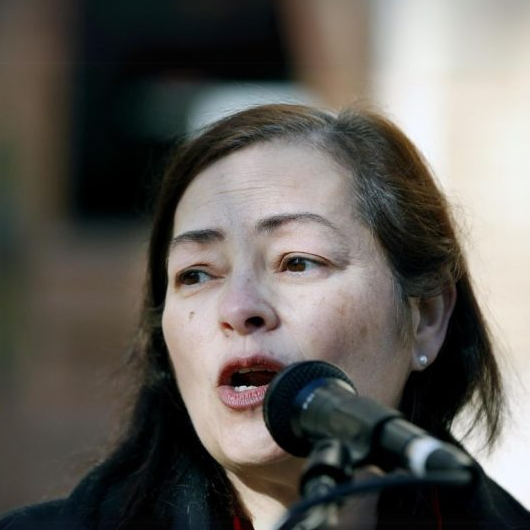
Completed by Deborah Gonzalez
on April 20, 2024
What is your name?
Deborah Gonzalez
When is your birthday?
August 16, 1966
Tell us more about yourself.
I am an experienced attorney, incumbent Athens district attorney and former Georgia state legislator who is passionate about transforming our criminal justice system. Throughout my career I have advocated for victims of sexual harassment and domestic violence, as well as for greater protections for children and working families. I am also the most progressive candidate in this race and am committed to continuing to address racial disparity in our legal system.
What office are you running for?
District Attorney, Western Circuit
What is your party affiliation?
Democrat
Attach a photo of yourself
https://branch-production-bucket.s3.amazonaws.com/images/candidates/1718289582269_249404954_303096124972152_7760278466999803351_n.jpg
Attach your resume or CV.
https://branch-production-bucket.s3.amazonaws.com/images/candidates/1718289582386_Deborah%20Gonzalez%20Bio.pdf
Where did you go to school?
New York Law School, 1994-1997
Provide the link to your campaign website.
https://deborahforda.com/
What is your job/occupation?
District attorney
What city/neighborhood do you live in?
Athens
Is this your first time running for office?
No
What experiences have best prepared you to hold elected office?
I am an experienced attorney, incumbent Athens district attorney and former Georgia state legislator. I am passionate about transforming our criminal justice system. I have been a dedicated community activist, advocating for the rights of those most marginalized, including women, children, survivors, LGBTQ+ and others.
What actions would you take to enhance government transparency and trust in government?
We began with a data dashboard during our first year. We are also working with Justice Innovation Labs, which is taking a deep dive into our data to help us understand the consequences of our decisions and how we can make better ones for community safety. We are committed to the collection and sharing of data through our monthly newsletter, monthly Oconee Enterprise column, website, and data dashboard, etc. Transparency is the key to building trust in government and I am committed to that.
The court system is increasingly seen as overtly political. What more can be done to assure the public that the courts are neutral arbitrators of the law?
I have worked hard during my term to uplift public safety and ensure people feel that they are protected in their homes, their neighborhoods, where they work and where their children go to school or to play. To accomplish this, we have used a three-phase approach to community safety: prevention, intervention and re-entry. When I enacted plans and policies based on these phases, I did so with no thought of how the community votes. I have always worked to protect others, regardless of party affiliation. This is how I have always practiced in my career and how the courts should be run. Public safety and justice should not be a partisan issue.
What are your personal security concerns, given the increasing attacks on judges and court officials nationwide and the rise in hostility toward judicial officials generally?
Since taking office I have had my car keyed in the courthouse garage, a wire noose left in my backyard, and faced various threats over social media. Security is a real issue. I have had to employ security when I attend certain functions. I am always aware of my surroundings and any possible threats to myself, my family members, or my office staff.
How will you manage large caseloads exacerbated by the coronavirus pandemic?
I inherited a backlog of about 2400 cases when I took office on January 1, 2021. Using a combination of ARPA funds and the resources already assigned to my office, I created a Case Analysis and Pretrial Evaluation (CAPE) process to strategically address and resolve these cases. The partial shutdown of the court system due to the pandemic hit DA offices around the state and the country. But we have resolved the majority of them and still have a bit more to finalize.
Do you believe public access to public records is sufficient in your jurisdiction and, if not, what steps do you support to remedy that?
This office provides information to the public. Given the level of prosecution, much must remain confidential to protect victims and witnesses during the legal process. An issue we have encountered is the misuse and abuse of laws, such as the Open Records Act, to clog our resources with fictitious requests. They have been made with the sole purpose of adding to our workload and to diminish our limited resources, instead of for purposes that would assist the public in expanding knowledge of essential information as well increase understanding of the criminal legal system and the district attorney office’s role in serving justice.